GENERAL INFORMATION GUIDE FOR SLOVENIA
welcome
dobrodošli
Sloveniaforyou
Slovenia's no1 independent website!
INFORMATION ON SLOVENIA
Where is Slovenia?
Drinking in Slovenia
Crime in Slovenia
Currency in Slovenia
Driving in Slovenia
Electricity in Slovenia
Emergencies in Slovenia
EU Slovenia
Geography for Slovenia
Hospitals in Slovenia
Independence
Internet in Slovenia
Language in Slovenia
Opening Hours in Slovenia
Phones in Slovenia
Politics in Slovenia
Population of Slovenia
Public Holidays in Slovenia
Religion in Slovenia
Smoking in Slovenia
Tipping in Slovenia
Tolls in Slovenia
Visas for Slovenia
Water in Slovenia
Where is Slovenia and how do I get there?
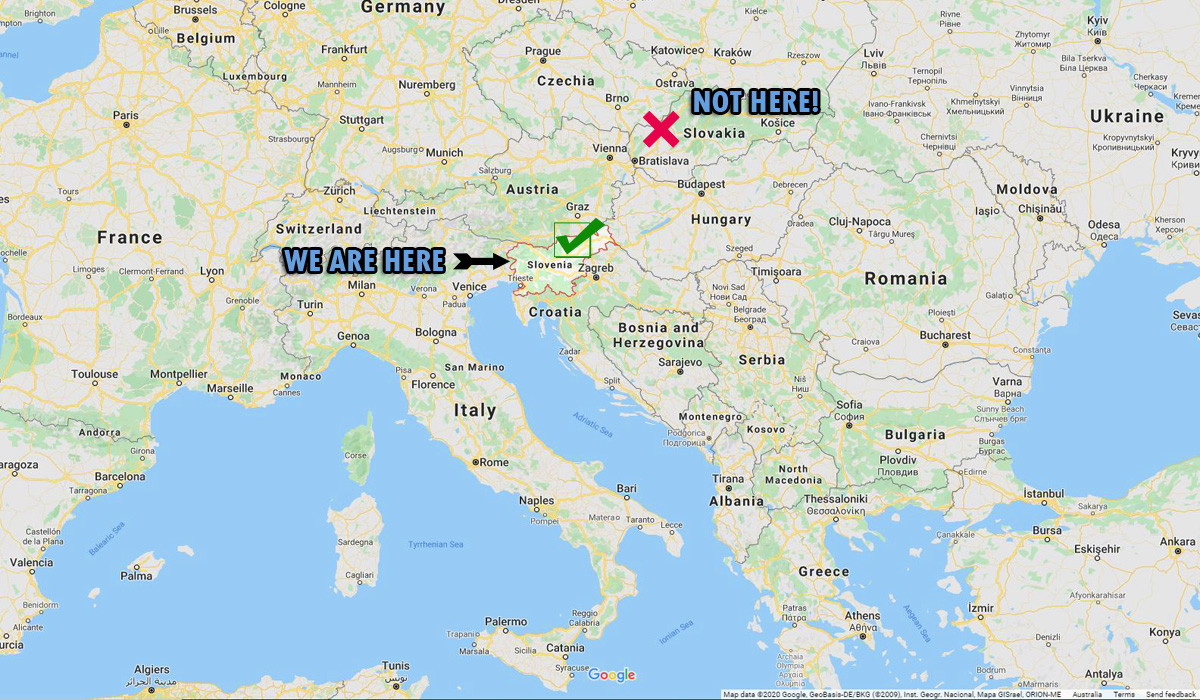
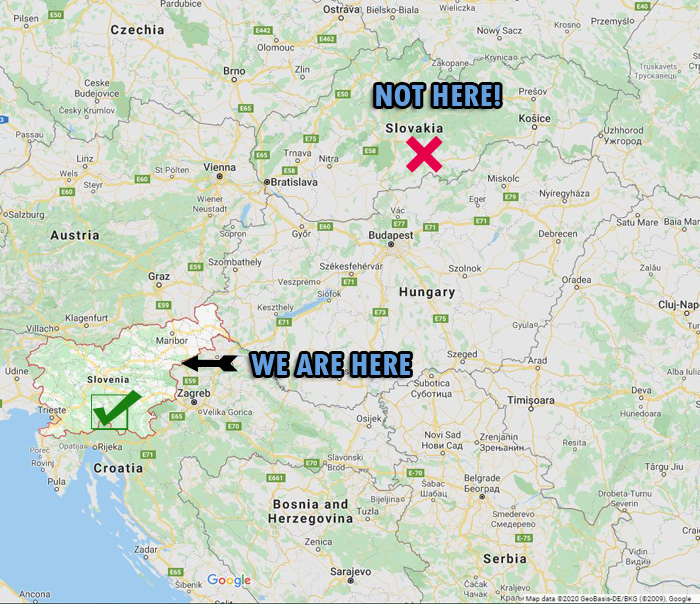
Well thanks for asking! As you can see, Slovenia is found wedged in between Austria to the north, Italy to the west,
Croatia to the south and Hungary to the east.
Slovenes ask nicely if you could please not confuse Slovenia with Slovakia !!!
Slovenia's capital Ljubljana was served by several airlines with regular links to many cities
across Europe but due to the Covid19 situation, this is changing on a regular basis.
Slovenia also has normal train and bus connections with Vienna, Salzburg, Graz, Budapest, Zagreb and Trieste onto Venice. Again due to the current situation, you will need to check
the relevant websites to see what services are operating.
Slovenian Train Website
Trains coming into Slovenia
Slovenian Bus Website
You can also book transfers into and out of Slovenia easily with our partners,
just visit our page or email us at
info@sloveniaforyou.com
Alcohol - Drinking in Slovenia
Slovenia is a fantastic place to hike all day and then enjoy an ice cold beer on your return. As for wine, they are as passionate here about their
vino and with good reason, it is very gooood! Beer, Wine and Spirits are widely available from most supermarkets, restaurants
and pubs with all the local brands widely supported plus of course popular foreign brands.
SHOW ME THE VINO!
Slovenian winemakers are fiercely proud of their vino and the passion is infectious when you visit a winery and they describe their love of the
winemaking process. The quality is outstanding and Slovenians are naturally innovative so they are always looking for a new methods to improve their wines.
There are over 40,000 wineries in Slovenia and they are mostly located in 3 main wine growing areas:
Primorska to the west, Posavje to the south east and Podravje to the east.
Whites account for 65% of the output in Slovenia but the reds are emerging fast as Slovene winemakers
try to diversify by experimenting with both varieties.
See our 'Wineries' page for a more in-depth look at Slovene wine.
BEER IS NEAR!
In regards to the amber fluid, Slovenes enjoy their lager or "pivo" and are big drinkers if we look at the per capita stats.
A rivalry had existed between the 2 biggest brands in Slovenia and you are said to be either green or red
in supposed reference to your political and social status.
Green is for Zlatorog from Laško. The legendary brew is made in the town of the same name and regarded as the 'real mans drink'.
Union the Red from Ljubljana has a sweeter taste and
is considered a bit of a yuppie's beer for the suits. In any case it was said that one never drank the other.
Its all immaterial now as Heineken owns Laško Breweries which owned Union as well and control over 90% of the country's market.
A tour of the Laško and Union breweries will not disappoint and is highly recommended. There is also a growing craft beer scene with
microbreweries popping up all over Slovenia and of course centred in Ljubljana.
Read our blog here about touring the Laško Brewery.
AND SPIRITS?
As in the rest of Eastern Europe, the Slovenes make their own firey brands of 'Rakija' or Brandy.
They are usually distilled from fruit but Slovenes also make a mean version from honey. It's usually
referred to as Slivovka or Slivovec and should be sipped and never drunk by the shot unless you have no
plans for the rest of the week.
Most of the major brands of spirits are available in all supermarkets.
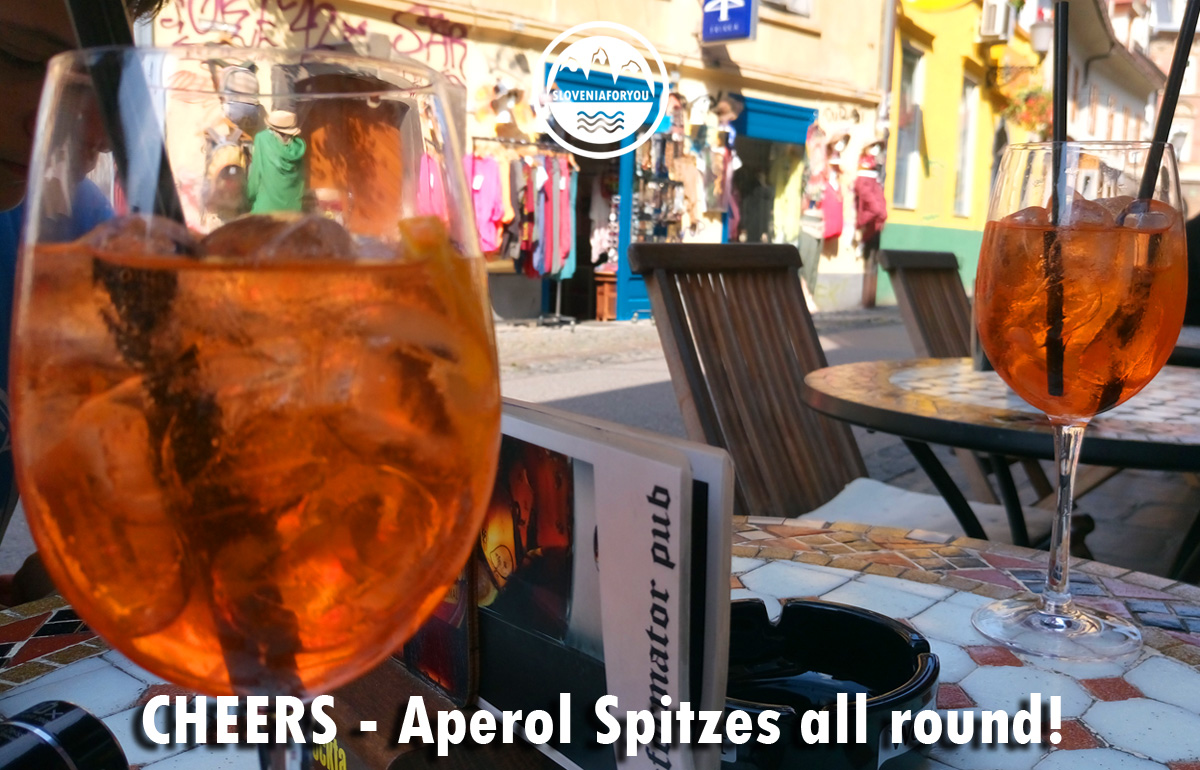
To toast someone or something in Slovenia they use the term "Na Zdravje" which means "to your health"!
Slovenia is one of the safest countries in Europe, if not the world.
It is pretty rare that you will see or encounter crime of any
kind in your travels, and violent crimes are almost unheard of.
With an approximate 10,000 convictions each year, the major crimes are larceny and
fraud with violent crimes way down the list.
In general, travel for single women and everyone else shouldn't present a problem but that's
not to say you shouldn't take precautions.
Be vigilant and alert with your belongings like you would anywhere else in the world.
A global exercise was undertaken to see which city possessed
the most honest citizens in the world. Organisers left mobile
phones on park benches to see if passers by would hand them in
or simply walk off with them.
Ljubljana received top marks with 29 of the 30 phones handed in.
Need we say more?
After Slovenia gained independence in 1990, it moved quickly to implement the Tolar which took over from the Yugoslav Dinar and was valid from 1991 till 2007 when the Euro was introduced.
Like other EU nations, Slovenia issues its own euro coins.
If you wish to get an approximate idea of how many euro's you
can buy for your money, use:
XE.com's Universal Currency Converter
Roads:
Slovenia's main highways and freeways are well-developed and well-maintained.
Freeways will have double lanes and sometimes triple lanes with far right hand lanes for trucks and slow vehicles.
Traffic is brisk with many vehicles doing over the 130km/h limit. If you're a timid driver then stay in the right lane but
at a speed where you can overtake quickly as you will be stuck behind many a truck and caravan. Cars will appear in a blink of an eye so be prepared for this.
In summer, the freeway to the coast and border crossings are often highly congested so allow for this. Also if there is an accident or breakdown,
traffic can turn to a crawl so look for an appropriate exit or you could be there a while!
Secondary roads/Country roads and roads within towns and villages are notoriously narrow and caution is needed due to
speeding drivers and a lack of passing space. In a lot of villages roads were originally horse and cart tracks so
are only wide enough for one car. It is not uncommon for two cars approaching each other to come face to face where a standoff occurs and
one driver will need to reverse or find somewhere to pull into so the other car can pass.
Parking:
Parking can be difficult in a lot of towns as parking space is limited and town streets are notoriously narrow.
Good examples are Piran and Ljubljana where parking is scarce and also expensive.
Yellow spaces are reserved.
Blue spaces, parking for 30 minutes. White spaces for longer periods with appropriate fee paid.
Driving Culture:
Traffic moves on the right in Slovenia and travellers from countries like the USA and Australia are often
astounded by the aggressiveness and speed of drivers both in cities and on highways.
You will easily be passed even if doing 130km per hour on the main freeways.
Many of the serious accidents in Slovenia occur as a result of high-speed driving.
Having said that, road rage is rare, if you obstruct another vehicle due to slowness, they will usually flash their lights and then pass you at the
earliest opportunity.
Misc Information:
- By Slovene law, the maximum legal blood-alcohol limit for drivers is 0.05.
- International Driver’s Licences are valid for a maximum of one year, after which residents of Slovenia are required to obtain a Slovene driver's licence.
- International Driver’s Licences are not needed to rent a car, but they are needed when police pull you over and want proof you can drive a car.
- Your local licence may not be sufficient for them so an IDL is a good idea.
- Motorists are required to have their headlights on during the daytime plus drivers and passengers alike must wear seat belts.
- The use of mobile phones whilst driving is prohibited in Slovenia.
- Snow chains or winter tyres are mandatory in winter from October to March and a fine applies if not adhered.
- Buses have right of way.
The maximum speed limits of vehicles in towns are:
50 km/h - in built up town areas
30 km/h - in speed limit zones
10 km/h - in pedestrian zones.
The maximum speed limits of vehicles outside of towns are:
130 km/h - on highways/freeways
100 km/h - on roads marked as such
90 km/h - outside built up areas

Traditional Voltage was 220V, 50hz but Slovenia has moved to the
standardised EU voltage of 230V, 50hz.
The variance of 220-240V will not affect most appliances as they are built to tolerate variances in Voltage.
However if the frequency of your appliance differs from 50Hz, then usage is not advised.
Slovenia uses a round, two-pin plug.
You will need an adaptor and\or voltage coverter if your appliance uses a different plug.
Most travel voltage converters cover appliances from 50-1600 watts but they are not designed for long periods of use.
Electronic goods need a suitable transformer.
In all cases, check your device to see whether you can use an adaptor or need an actual converter.

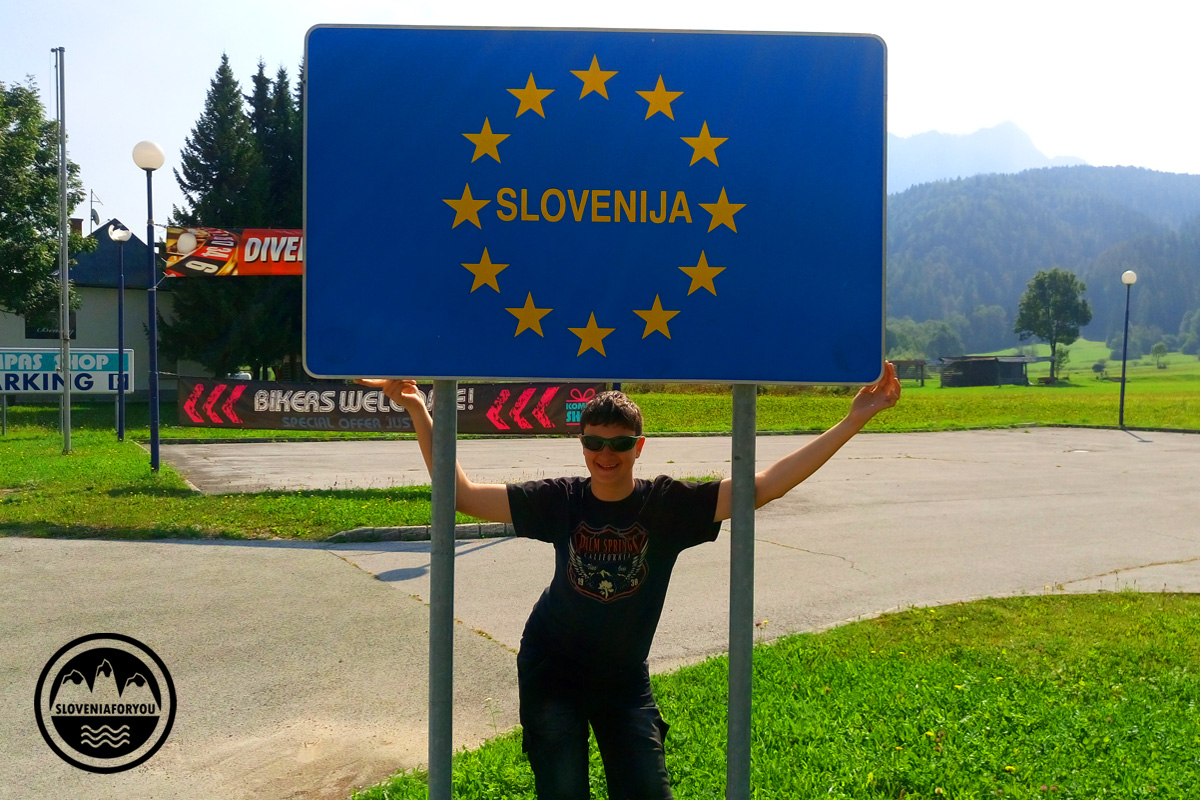
Slovenia joined the EU in May 2004.
While the older generation in Slovenia were still adjusting to
a post-socialist society,
they also found themselves having to decide whether to join the
EU as well.
Most surveys declared that joining the EU would not have any visible
impact on the common man, but many agree that joining the EU raised prices
but has placed Slovenian businesses in a stronger position with business
grants on offer and Slovenian products available to a wider market.
Surveys also declared that people felt more secure by being part
of the EU's military might, and that students would benefit from
more opportunities in the EU market.
Slovenia has a high standard of health and
hygiene and their hospitals are also well equipped with modern
equipment and well trained staff, many of whom will speak very
good english as well.
Every town of note in Slovenia will have a medical center and
they are generally open from 0700 to 1900 weekdays although times
may vary.
Members from fellow EU countries who hold a valid European Health Insurance Card (EHIC)
can avail themselves of general and most emergency treatments
at no charge. This includes ambulance travel if referred by a local GP.
Otherwise ambulance costs can be up to 70%.
Citizens of other countries must pay for medical services and
are encouraged to purchase travel health insurance before arriving
in Slovenia.
Declared Indepedence: 25th June 1991.
In 1990, Slovenia were the first republic in Yugoslavia to hold
democratic elections and the ensuing electorate vote declared
overwhemingly in favour of an independant republic.
After a brief 10 day stand off with Serbia, Yugoslav forces withdrew
and Slovenia as an independant nation was born. It was effectively
recognised by the world on 15th January 1992 and from there quickly
proceeded to join the United Nations, NATO and the EU.


Slovenes have taken to the net in astonishing
numbers in recent years and recent stats show there is over
1.25 million registered users with over 75% of homes having an internet connection.
Modem and Wireless services are widely available and where
Siol (Telekom Slovenije) once dominated the market, new entities have joined the race
in providing web access to Slovenes.
Internet usage is widespread, and you might be surprised to find
farmers in remote areas furiously clicking away at their keyboards.
For tourists, public wi-fi is readily available in cities (60 minutes of free wifi in Ljubljana www.wifreeljubljana.si) and towns via libraries and restaurants. Hotels
will often offer wi-fi, but sometimes charge a fee either hourly or daily.
.
The main ISP's are ARNES, Telekom Slovenije, Telemach and T2. The country suffix for Slovenia is 'si'.
The official language is Slovene.
Italian, German and Hungarian are all spoken along their respective
border areas.
Slovenes also have a good understanding of neighbouring slavic tongues like
Serbo-Croatian.
Being a slavic language, many Slovene words are very similar to
those found in other languages like Czech and Russian.
English has taken over from German in schools and is widely understood,
especially amongst the younger generation who speak English very
well indeed.
English speakers should have no trouble at all whilst travelling
throughout tourist areas in Slovenia.
Main phrases:
dober dan - good day
na svidenje - goodbye
hvala - thanks
prosim - please
kako si? - how are you?
koliko stane? - how much is it?
Opening Hours
In General:
Shops:
Monday - Friday 07:00/09:00 – 19:00/21:00
Saturday - 07:00/09:00 – 13:00/15:00
Sunday - 09:00 – 13:00 (only major shopping centres)
In major cities some grocery stores are open 24 hours and some essentials can be bought at 24 hour petrol stations.
Pharmacies:
Monday - Friday 07:00 - 19:00
Saturday - 07:00 - 13:00
There are 24 hour pharmacies in all major cities.
Banks:
Monday – Friday 09:00 – 17:00; with an hour break for lunch
Saturdays and Sundays closed
Post offices:
Monday – Friday 08:00 – 18:00/19:00
Saturdays 08:00 – 12:00/13:00 (in larger towns)
Sundays and holidays Closed
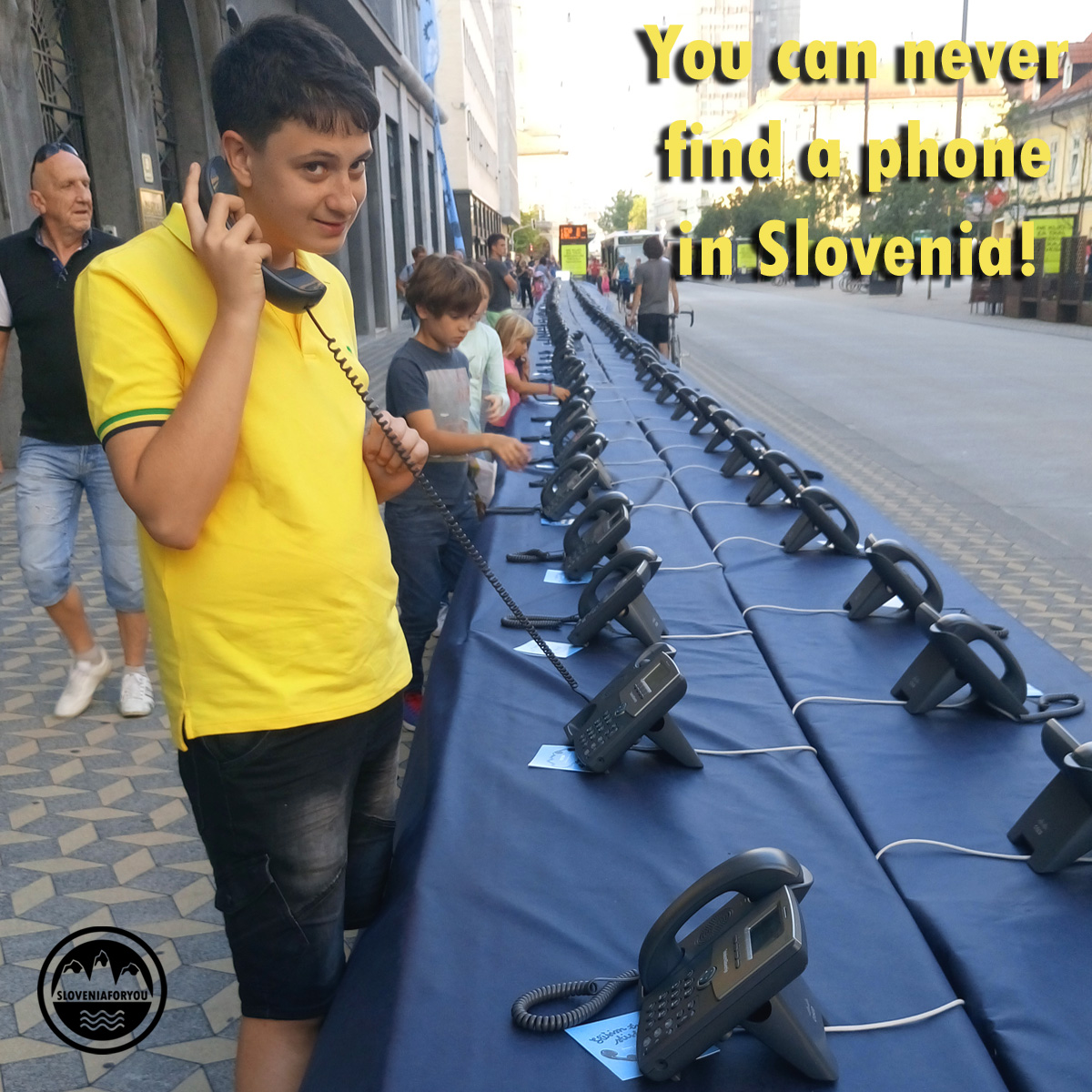
The country dialling code for Slovenia is +386.
All telephone numbers are 9 digits long (initial 0 plus eight numbers).
The first one, two, or three digits after the zero are the area code. The possible formats are: (0x) xxx xx xx, (0xx) xxx xxx, and (0xxx) xx xxx.
For international calls to Slovenia, the prefix depends on your country's calling code e.g 00 for most European countries
The prefix for international calls from Slovenia is 00 (eg - for the USA number 00 1 should be dialled).
An example for calling Ljubljana:
xxx xx xx (within Ljubljana)
01 xxx xx xx (within Slovenia)
+386 1 xxx xx xx (outside Slovenia)
Most tourists will want to use their own phones when entering Slovenia so may have a plan already set up with your local provider for calls and data.
This is convenient but usually comes with hefty roaming charges.
If your phone is unlocked so that any SIM card can be inserted, then another option is to purchase a local SIM card and have a local number to make local calls.
The other option is to purchase a phone on contract or a pay-as-you-go option.
SIM Cards are easy to find as most shopping centres will have mobile phone stores plus you can buy in them in convenience stores and supermarkets.
The major mobile providers include Mobitel, Tusmobil, Simobil and Telekom Slovenija.
Mobile phone coverage is excellent throughout the country so shouldn't present a problem if you are out in remote places.
Slovenia is a parliamentary representative democratic republic, whereby the Prime Minister of Slovenia is the head of government.
Current parties in parliament are the Slovenian Democratic Party, List of Marjan Šarec, Social Democrats, Modern Centre Party, The Left, and New Slovenia-Christian Democrats.
Slovenes elect a head of state, (the president) and a legislature. The president is elected by the people for a five year term.
The National Assembly is Slovenia's parliament and has 90 members who are elected for a four-year term.
Jan 1,2 - New Years Day
Feb 8 - Preseren Day (Cultural heritage Day named after the poet)
Easter - Easter Monday Holiday
Apr 27 - Resistance Day (Day of uprising against occupation)
May 1,2 - Labour Day
May 31 - Pentecost
Jun 25 - Day of Slovene Statehood - Independance Day
Aug 15 - Assumption Day
Aug 17 - Slovenes from Prekmurje Incorporated into the Mother nation (State holiday, Not work free)
Sep 15 - Restoration Day- Reunion of Slovene Littoral with homeland (State holiday, Not work free)
Oct 31 - Reformation Day
Nov 1 - All Saints Day
Nov 23 - Rudolph Maister Day (State holiday, Not work free)
Dec 25 - Christmas Day
Dec 26 - Independence Day
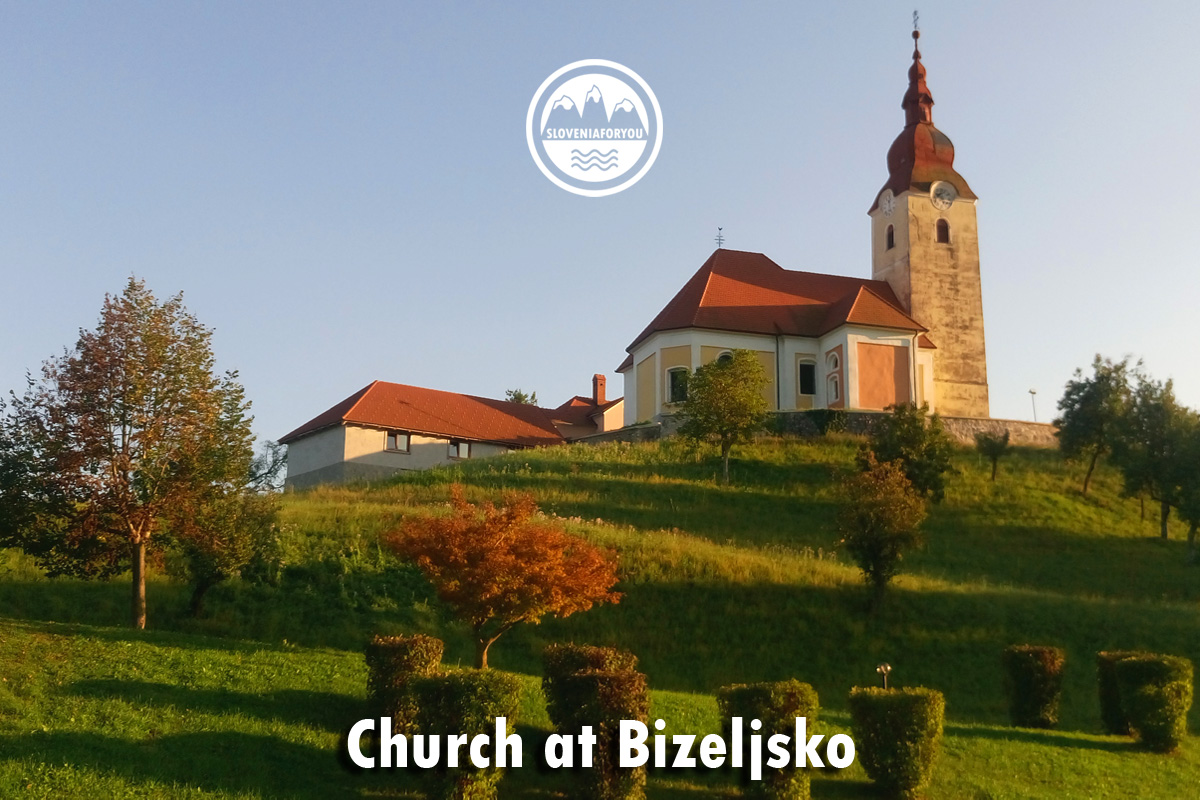
Roman Catholic (73%)
Orthodox (4%)
Islam (4%)
Like in most western countries, church attendances and religious
activity are on a slow decline as the younger generation find
other distractions like their phones and the internet to keep them preoccupied.
However, you will still find the older generation shuffling off
to mass every Sunday in every town and village throughout the
country.
Smoking is still one of the most popular
pastimes even though laws have been brought in banning smoking
in all indoor public (restaurants, bars etc.) and work places
since August 2007.
In most indoor workplaces, indoor public places, and public transport, smoking is restricted to designated smoking rooms.
These rooms are exclusively for smoking and may not exceed more than 20 percent of the premises, plus meeting other technical requirements.
Latest stats show smoking prevalance for males at 27.5% and females at 21% of the population.
Slovenia's decision to introduce Vignettes (Prepaid Toll Fee for Freeway use Stickers) in July 2008 has raised much controversy
from road users, especially from their closest neighbours. The tolls were described as grossly unfair and overpriced for a country with
only 487km of highway system. Since then the prices have been adjusted and things have calmed down a little!
So what is the vignette?
The vignette is a sticker placed on the windscreen that enables usage of Slovenian motorways and expressways during a limited time period to all drivers of vehicles whose
maximum permissible weight is up to 3.5 tonnes.
It was designed to improve traffic flow through tolling points and reduce CO2 emissions.
To view everything you need to know about the Vignette (including prices), check the official DARS site
Vignettes can be purchased at:
Petrol stations in Slovenia and neighbouring countries
At some offices of foreign motoring organisations
At post offices in Slovenia
At some news kiosks.
Using a toll road without a valid vignette (without paying the toll) can and probably will incur a fine of between 300 and 800 euros.
** There are numerous complaints on TripAdvisor from tourists who have failed to buy a vignette when entering the country and subsequently fined.
If using a tolled freeway, make sure you purchase a vignette before entering Slovenia or at the first point on the border within Slovenia.
Since Jan 1, 2008 internal borders with
Italy, Austria and Hungary were abolished and EU citizens are
now free to cross the border as and when they please as long as
they have their ID cards on them and they dont stay longer than
30 days. To enter Slovenia from Croatia, it is sufficient to have a passport or an identity document,
if the visit does not last more than three months.
Citizens from countries like the USA, UK, Canada, Ireland, Australia, New Zealand,
Israel, Japan and the other European countries do not need visas
to enter Slovenia for stays of up to 90 days. A valid passport
(one that will not expire in the next 6 months) is
all that is needed - check with your government to confirm visa requirements.

Book an exciting tour from our partners today!
Choose a service for your holiday from our affiliate partners!
Accommodation Slovenia
Search for your ideal hotel, hostel, guest house or apartment in Slovenia and worldwide through our Booking.com link.
Goopti Transfers
Goopti offers the cheapest shared transfers across their network which includes Slovenia and neighbouring countries!
ATET Car Rental Slovenia
Book your Slovenian car rental with the best. ATET have offices in Ljubljana, Airport, Maribor & Koper.
Use code: SLOFORYOU in the booking for the best rates.
Zest Car Rental
Zest Car Rental is a great choice for car rental across Europe and the world, get a quote today!
如果您想预订,
请在这里给我们发电子邮件 Sloveniaforyou.com
Auf unserer Webseite finden Sie eine große Auswahl an öffentlichen und privaten Touren in Slowenien. E-mailen Sie Sloveniaforyou.com und buchen Sie Ihren Ausflug!
Dê uma olhada nas nossas ótimas opções de passeios por toda Eslovênia. Ha opções de passeios em grupos e também passeios exclusivos. Se quiser fazer uma reserva, basta enviar um email para nós aqui do Sloveniaforyou.com